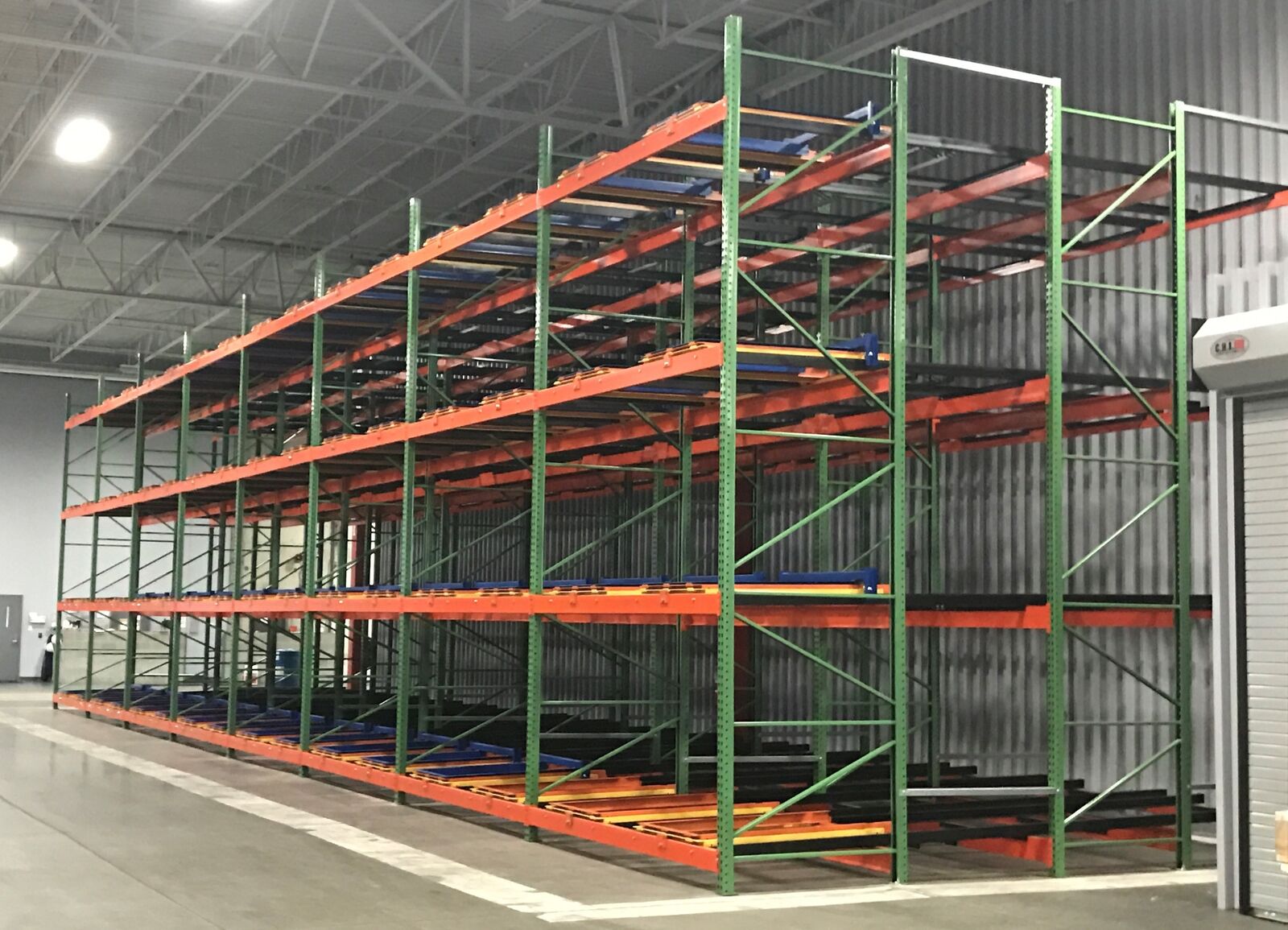
Pushback Rack in Murray, UT
Pushback rack in Murray concentrates repeated pallet inventory behind a single aisle-facing position without sending the forklift into the rack. Loads rest on nested carts moving along inclined rails. Loading pushes stored pallets rearward, and controlled retrieval lets the remaining pallets return toward the front.
A compact warehouse needs more than a higher position count. It needs somewhere to receive stock, assemble orders, and move replenishment loads without blocking other work. Start by separating those floor functions, then determine which reserve products have enough matching pallets to occupy dedicated lanes.
Pushback rack planning begins with the building interface
An addition to existing rack requires a documented compatibility check rather than an assumption that carts fit any beam pair. Record manufacturer information, connection details, member sizes, damage, and current elevations. The proposed arrangement must account for its own loading and support requirements.
Beam and frame sizing should use actual pallet weights and the reactions of the selected lane system. A nominal capacity label from another arrangement does not establish suitability. Include the heaviest expected load, lane depth, beam spacing, and the planned vertical arrangement in the review.
Keep handling space distinct from storage space. The truck remains in the aisle, but turning with a loaded pallet and reaching the upper positions still require clearance. Check attachments, mast height, load overhang, and the approach angle where columns or nearby picking activity constrain movement.
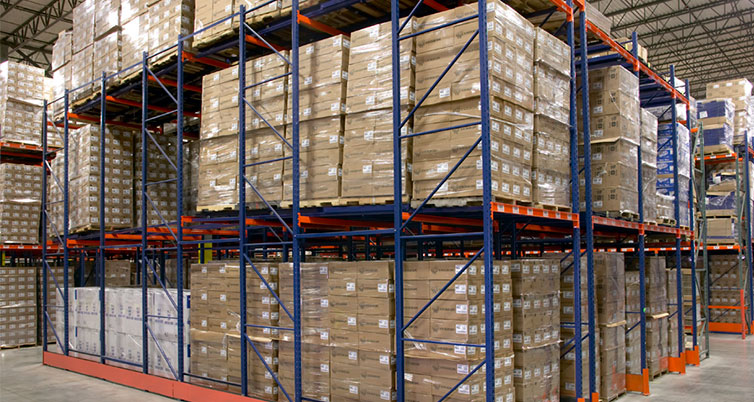
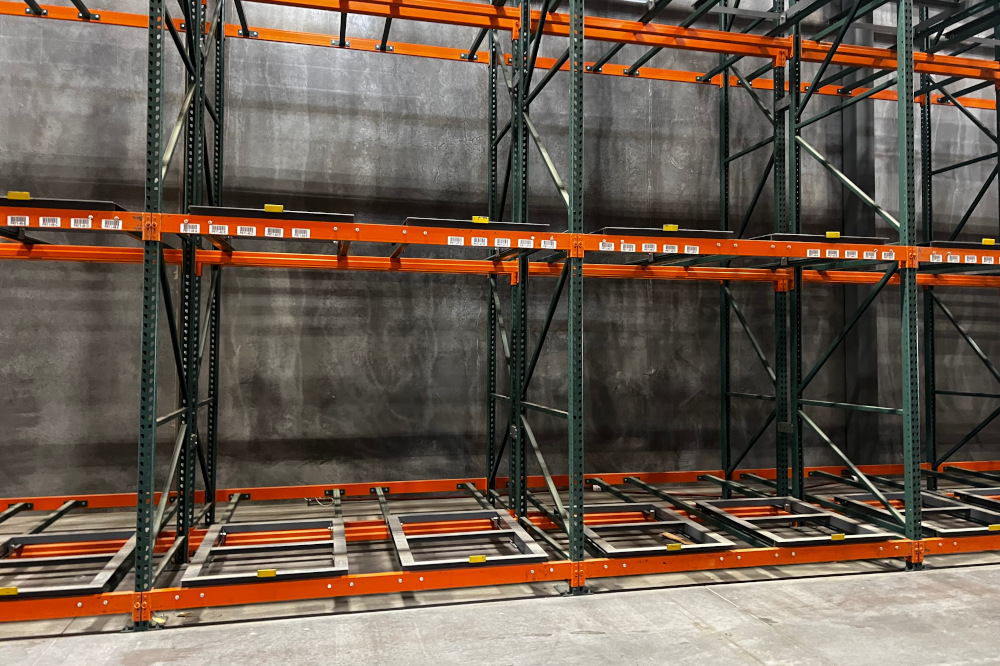
Working room around Murray's central industrial streets
Near Vine Street industrial and the 5300 South corridor, warehouses connecting to I-15 may need receiving space protected within a constrained site. An auto-parts distributor can separate repeated replenishment pallets from individually selected parts, while a healthcare supplier may need additional lot-specific lanes. Those differences change depth and aisle assignments. Our division belongs to Warehouse Equipment & Supplies Co., supplying and installing warehouse equipment since 1997.
Push back racking checks for mixed reserve inventory
Recurring SKU quantities
Use actual pallets per SKU between deliveries and withdrawals. Separate ordinary holdings from exceptional receipts so lane depth reflects inventory that genuinely remains in storage.
Pallet construction
Inspect bottom boards, runners, damage, and load stability. A pallet that works on conventional beams may contact a cart differently and needs assessment for the selected equipment.
Lot access
Determine whether batches can share a lane without blocking required withdrawals. Healthcare supplies and dated food may need separate lane assignments even when their product numbers match.
Work-area boundaries
Map receiving queues, production supply, and dispatch separately. Do not count a needed transfer area as available storage simply because it is empty during the site measurement.
Pushback rack depth and retrieval alternatives
Typical arrangements hold two to six pallets deep on nested carts and inclined rails. Choose among those depths using inventory history, not a uniform block preference. Shallower lanes can accommodate modest reserve quantities without dedicating unused rear positions to products that rarely fill them.
A pushback pallet rack follows LIFO within each lane, meaning the last pallet loaded is normally withdrawn first. Selective rack provides direct access when a specific pallet must be chosen. For strict FIFO movement, consider pallet flow with separate loading and unloading faces instead of expecting operators to overcome blocked access.
Drive-in offers another approach for substantial quantities of matching stock, with trucks entering the storage structure. Compare that operating method with aisle-only handling here. The decision should consider actual batch sizes and retrieval needs, not density alone, especially where receiving already has limited maneuvering room.
Recent Installations
Racking projects completed for warehouses across the Salt Lake City metro and Wasatch Front.


Review the existing layout before adding depth
Provide a floor sketch, current rack photographs, pallet weights, and normal replenishment quantities. Mark where deliveries wait and where orders accumulate. That information supports a comparison of reuse, replacement, and separate reserve areas without assuming the present rack can accept a new storage mechanism. (801) 942-0493.
Salt Lake Pallet Rack
3556 S 5600 W
Suite #1-1293
Salt Lake City, UT 84120
(801) 942-0493Monday - Friday: 8:00 AM - 6:00 PM
Murray reserve-storage questions
Other Storage Services in Murray
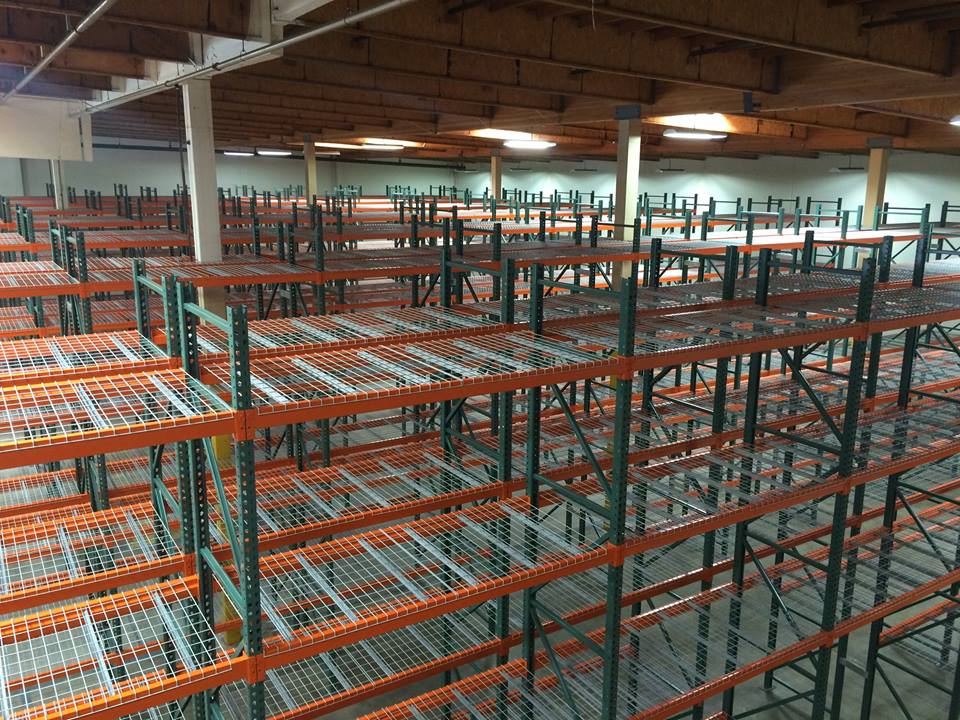
Pallet Rack
Every pallet reachable, every time. The baseline we size everything else against.
View details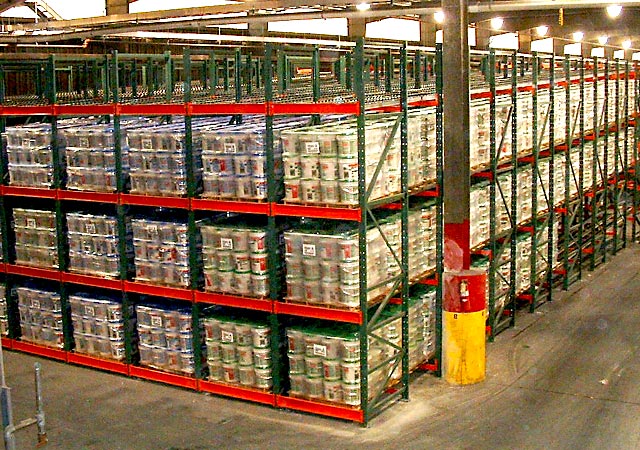
Pallet Flow Rack
Load one side, pick the other, and let gravity enforce first in, first out.
View details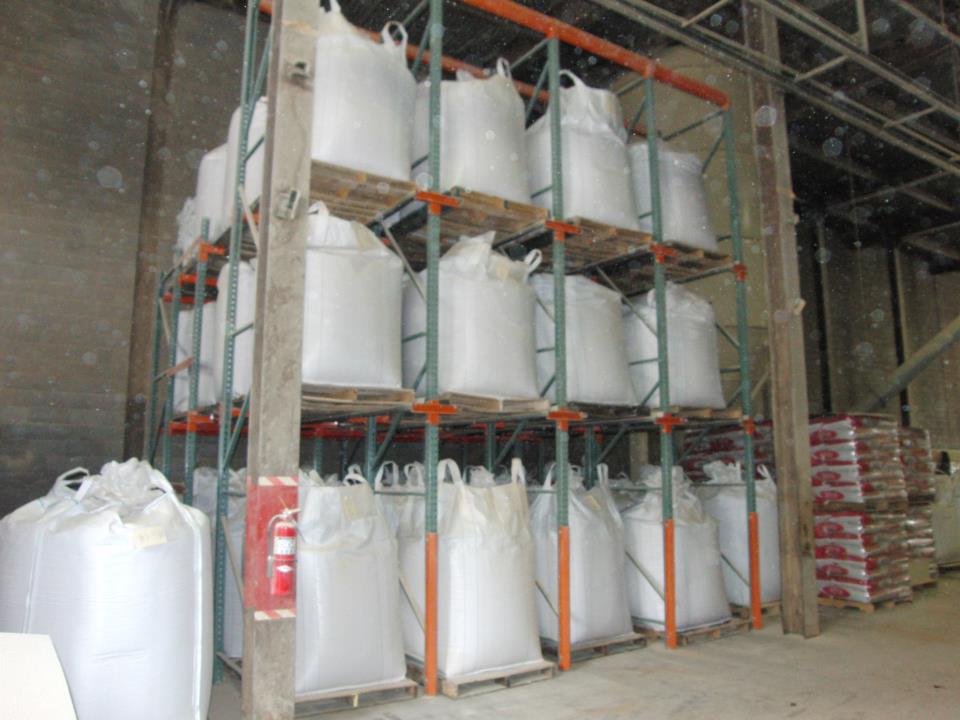
Drive-In Rack
Forklift access inside deep storage lanes for bulk inventory, with fewer access aisles.
View details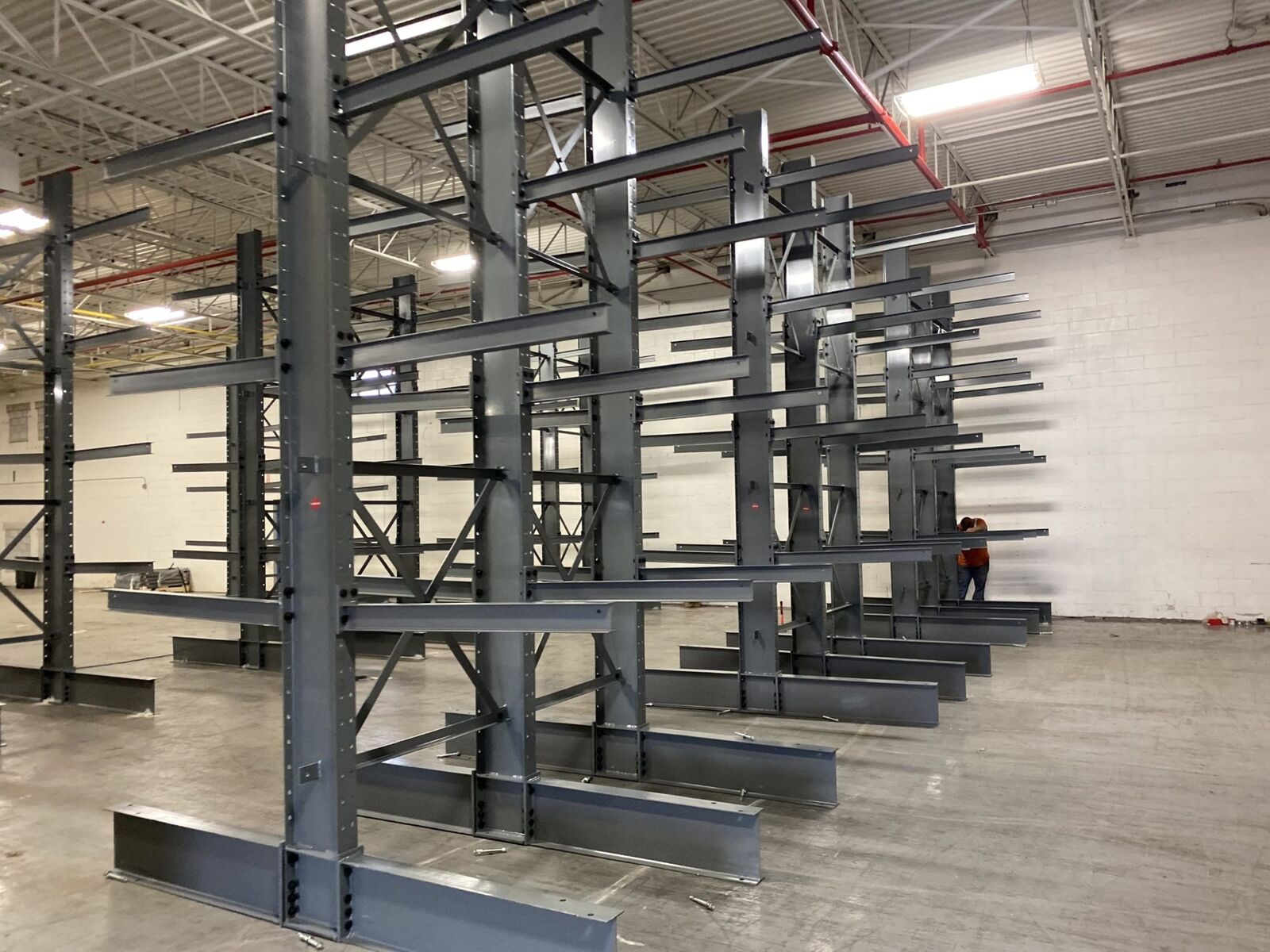
Cantilever Rack
Arms with nothing in front of them, built for lumber, pipe, and anything a pallet can't hold.
View details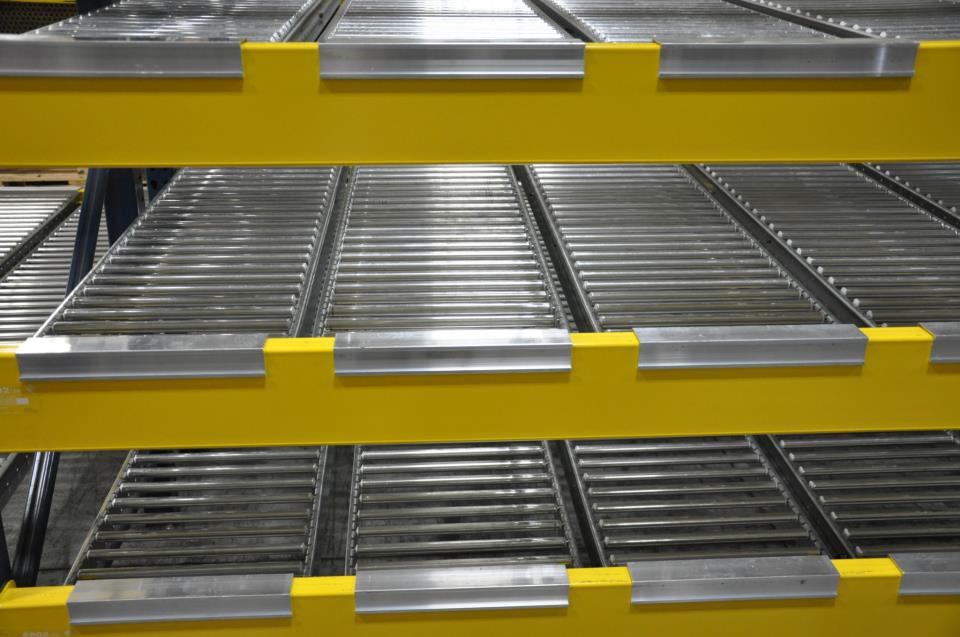
Carton Flow Rack
Cases advance to the picker instead of the picker hunting for cases.
View detailsWarehouse Relocation
Teardown, label, coordinate transport and reinstall rack around a reviewed layout for the next building.
View detailsNearby Areas We Also Serve
Our delivery and installation territory covers the Salt Lake City metro and Wasatch Front, so one team can handle multiple buildings for the same company.
Where We Work
Located in Salt Lake City, we serve the entire Salt Lake metro and Wasatch Front with industrial pallet racks and warehouse storage solutions.
Salt Lake Pallet Rack
Address
3556 S 5600 W
Suite #1-1293
Salt Lake City, UT 84120
Phone
(801) 942-0493Business Hours
Monday - Friday: 8:00 AM - 6:00 PM
Saturday: Closed
Sunday: Closed
Need Pushback Rack in Murray?
Call (801) 942-0493 or request a quote and we will get a layout started.